
Freshwater Pearl Buying Guide
The 7 Factors That Matter
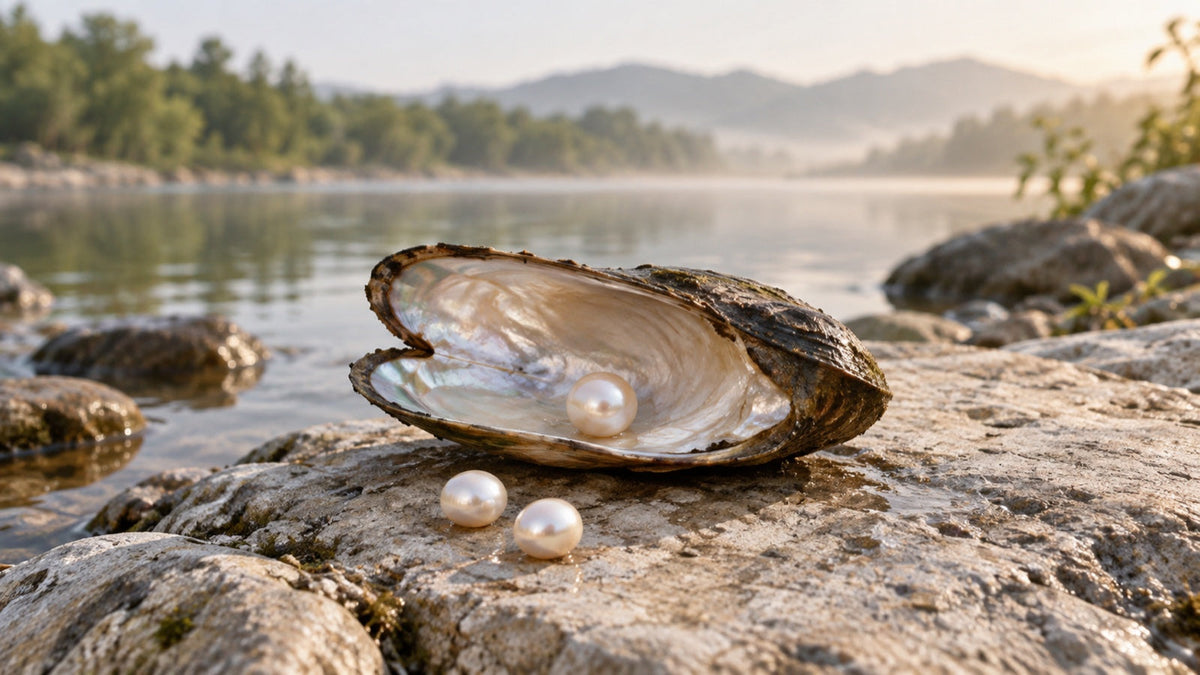
Pearl shopping becomes clearer when you stop looking for a single grade and start looking at the pearl itself. GIA evaluates pearls through seven value factors: size, shape, color, luster, surface quality, nacre quality, and matching. Those factors are more useful than an unexplained label such as AAA, 5A, or “top quality.”
Here is how to read them in real jewelry.
1. Luster
Luster is the quality of light reflected from a pearl’s surface. Strong luster produces bright, relatively sharp reflections. Weak luster looks dull, chalky, or diffuse.
For many buyers, luster is the first factor to inspect because it creates the sense of depth that makes a pearl feel alive. A smaller pearl with strong luster can be more compelling than a larger pearl with a flat surface.
When shopping online, look for several photographs under controlled natural or neutral light. Overexposure can make an ordinary surface appear brighter than it is.
2. Surface quality
Pearls commonly show spots, ridges, dimples, or other surface characteristics. Some are part of the material’s natural individuality; numerous or severe features can affect beauty and, in some cases, durability.
The question is not “Is the surface perfectly clean?” It is “Do the surface features work with the shape and design, and have they been represented honestly?”
3. Shape
Freshwater pearls appear in round, near-round, oval, button, drop, baroque, and other forms. Round pearls are generally rarer when other factors are equal, but shape is also a design choice.
Baroque pearls can be highly desirable because irregularity creates a sculptural focal point. A well-chosen baroque pearl should feel intentional in the composition, not like a compromise hidden by the setting.
4. Color
Pearl color can include bodycolor, overtone, and orient. What looks simply white in one photograph may carry cream, rose, green, or silver notes in person.
Color should be evaluated for beauty, consistency where matching matters, and accurate description. Ask whether color is natural or the result of treatment when that information affects your decision.
5. Size
When other factors are equal, larger pearls are usually rarer and more valuable within the same pearl type. But size does not override luster, surface, proportion, or design.
In a finished piece, read size in relation to the body and other materials. A large focal pearl can create presence; a smaller pearl can create rhythm or lightness. Product pages should provide millimeter measurements rather than relying on “delicate” or “statement” alone.
6. Nacre quality
Nacre quality is closely related to luster and durability. Thin or poor nacre can contribute to a chalky appearance or visible nucleus in some cultured pearl types. Consumers cannot always judge nacre from a standard product image, so clear material disclosure and reputable inspection matter.
7. Matching
Matching applies when a piece uses two or more pearls. It considers how consistently the pearls relate in size, shape, color, luster, surface, and nacre.
Perfect uniformity is not always the goal. Intentionally graduated, mixed, or asymmetric pearls can still be well matched when the overall effect feels balanced. Matching should be judged against the design intention.
What do AAA and 5A mean?
Letter and number grades are widely used by suppliers and sellers, but they are not automatically comparable across every business. A grade can be useful inside one supplier’s own range if the criteria are explained. It should not replace photographs, measurements, material naming, variation notes, or the seven value factors.
Ask what the grade measures and who assigned it.
Freshwater, akoya, South Sea, and Tahitian
These names refer to different cultured pearl types and producing mollusks. Freshwater cultured pearls are widely available in varied shapes and colors. Akoya pearls are strongly associated with classic round strands and bright luster. South Sea pearls are known for larger potential size, while Tahitian cultured pearls are associated with naturally dark bodycolors.
One type is not automatically “better” for every design. The right choice depends on luster, surface, shape, color, scale, matching, design, and budget.
How to read a pearl product page
Look for:
- pearl type stated clearly;
- approximate size in millimeters;
- shape and expected variation;
- color or tone shown under honest lighting;
- metal composition stated only when verified;
- whether the image shows the exact piece or a representative example;
- care guidance;
- return terms and a way to ask material questions.
Be cautious when a listing relies on adjectives but omits measurements and material facts.
Frequently asked questions
Are freshwater cultured pearls real pearls?
Yes. “Cultured” means human intervention began the growth process and the mollusk formed the pearl material. It is different from an imitation made of glass, plastic, shell-based material, or another substance.
Are baroque pearls lower quality?
Not by definition. Baroque describes irregular shape. Luster, surface, nacre, color, and the success of the design still matter.
Is a larger pearl always better?
No. Larger size can increase rarity when other factors are equal, but strong luster, pleasing surface, proportion, and design may matter more to the finished piece.
Can I compare a 5A grade across brands?
Not safely without knowing each seller’s criteria. Use grades as one piece of information, then compare the observable value factors and disclosures.
How should freshwater pearls be cared for?
Keep them away from perfume, cosmetics, acids, and abrasion. Store them separately from harder jewelry and wipe them gently after wear. Avoid ultrasonic and steam cleaning.